The year America lost eleven days
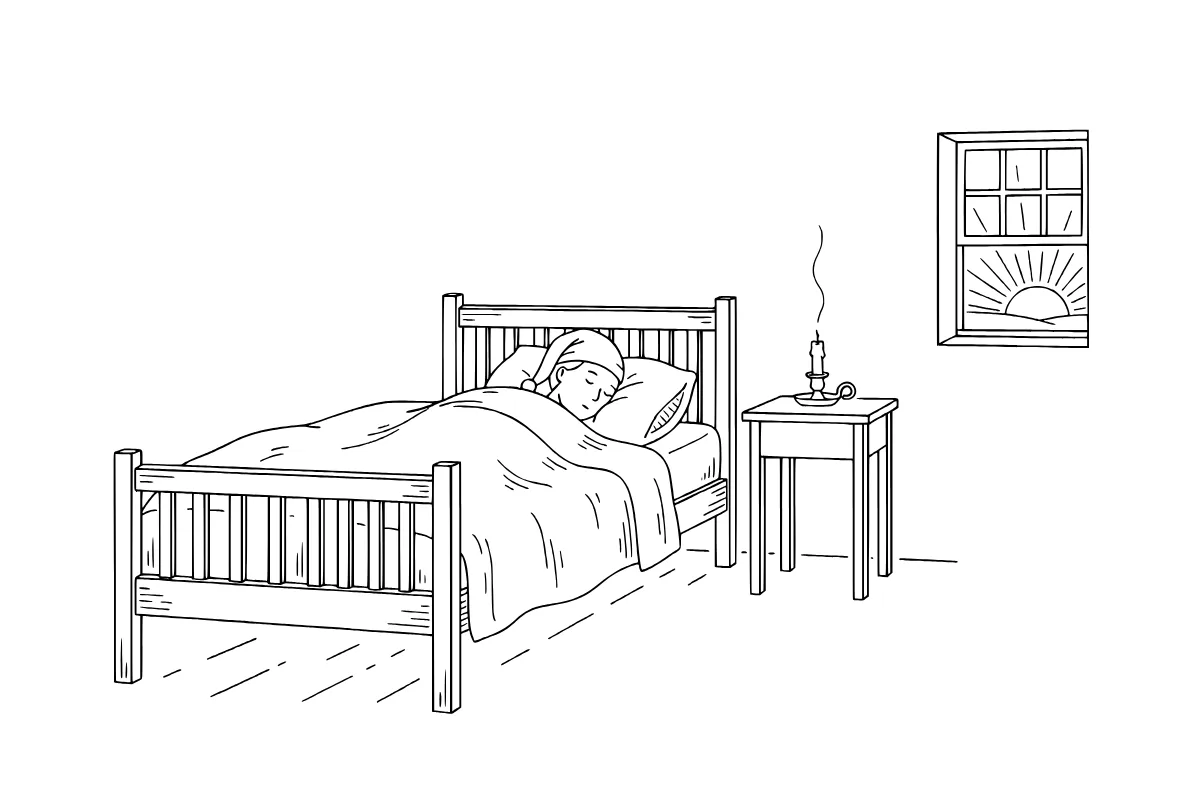
In 1752, Britain and its American colonies went to bed on September 2 and woke up on September 14.
- A year lasts about 365 days and six hours, so every fourth year gets February 29.
- Caesar's rule ran eleven minutes a year too long: by 1582, spring had slipped ten days.
- George Washington was born on February 11, 1731, by the old calendar. The history books now say February 22, 1732.
February 29 is not a quirk. It is a repair two thousand years old, and it still works.
The same text at three levels
This is how it begins at A1, at B1 and at C1. You choose the version you enjoy.
In 1752, people in Britain and in America go to bed on September 2. The next morning is September 14. Eleven days are gone. Why? The answer starts with a small extra day: February 29.
On the night of September 2, 1752, everybody in Britain went to sleep. The next morning was September 14. Eleven days were gone. The reason for it is also the reason for February 29.
In Britain, the night of Wednesday, September 2, 1752, was followed, by Act of Parliament, by the morning of Thursday, September 14. Eleven days simply never happened, and the reason lies in the same small puzzle as February 29. Why every four years, and why, now and then, not? The answer begins in the sky, with a number that refuses to be tidy.
Words for the text
- calendar
- A list of days and months.
- leap year
- A year with 366 days.
- season
- Spring, summer, fall or winter.
- equinox
- Day and night are equally long.
- century
- A hundred years.
- drift
- Move slowly away.
- riot
- Angry crowds fighting in the street.
- tax year
- The year for paying the government.
The opening of the text
A year is not 365 days
On the night of September 2, 1752, everybody in Britain went to sleep. The next morning was September 14. Eleven days were gone. The reason for it is also the reason for February 29.
Most years have 365 days. But once every four years, February gets an extra day, the 29th. Then the year has 366. We call it a leap year. Why do we need it? The answer is not on Earth. It is in the sky.
In a year, the Earth goes once around the Sun and comes back to the same season. That takes about 365 days, 5 hours and 49 minutes. So the real year is not a whole number of days. It is almost 365 and a quarter.
A calendar can only count whole days. If it uses 365 days every year, it is about six hours short each time. After four years, it is almost a whole day short. So, every four years, we add the missing day. That is the leap day.
Without leap days, the calendar slowly drifts away from the seasons. After about 750 years, Christmas comes in the middle of summer in Britain and America. Farmers, priests and kings all wanted a calendar that stayed in the right place.
In a few words
A year is 365 days and almost six hours. So every four years, we add a day. It is February 29. In 1752, Britain and America lose eleven days.
Sources
- Source: Wikipedia, “Julian calendar,” “Gregorian calendar,” “Leap year,” “Calendar (New Style) Act 1750” (citing R. Poole on the riots), “Old Style and New Style dates” (George Washington's birthday), “List of non-standard dates” (February 30), “Adoption of the Gregorian calendar” (the Thirteen Colonies in 1752), “Tropical year,” “Leap second,” “Fiscal year,” “Lady Day,” “Calendar,” “Calends,” “Isaac Newton” and “George Parker, 2nd Earl of Macclesfield,” en.wikipedia.org
- Source: The National Archives, Calendar (New Style) Act 1750, text of the Act, legislation.gov.uk
Levels
More texts in English
- Non-fictionIs there such a thing as the best diet?
Less fat or fewer carbs? A year later: a draw.
- Non-fictionHow do bees make honey?
Bees fly twice around the Earth for one jar of honey.
- Non-fictionWhy does the sea go in and out?
The Moon is more than 225,000 miles away. How does it lift the sea 30 feet in Alaska?
- Non-fictionA day on Venus lasts longer than its year
On Venus, a day lasts longer than a year.
An envelope with three complete texts at your level, as a PDF, for free.
Get your free envelope